

Bird Friendly Markham
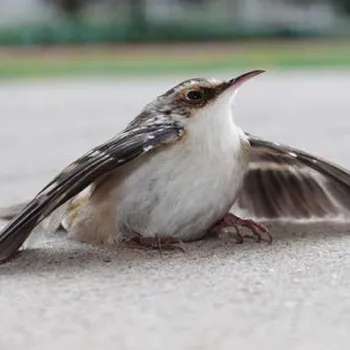
City of Markham’s Bird Friendly Guidelines have been developed to offer design-based solutions to make glass on buildings more visible to birds and avoid bird-window collisions.
You can read City of Markham's Bird Friendly Guidelines from 2026 here.
World Migratory Bird Day
Birds play a vital role in supporting biodiversity and enhancing the quality of life on Earth. They contribute significantly to environmental conservation by pollinating plants, dispersing seeds, and helping to sustain healthy ecosystems.
Canada’s landscape hosts more than 450 native bird species annually. Most of these species referred to as ‘migratory birds’ are protected under the Migratory Birds Convention Act, 1994.
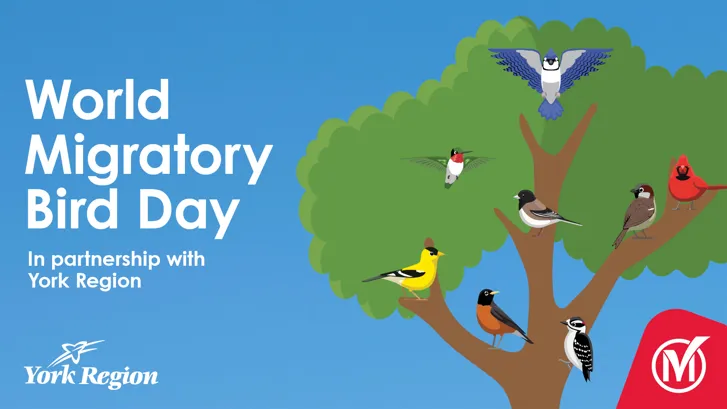
In 2025, City of Markham proclaimed May 10 and October 11, 2025, as World Migratory Bird Days. To mark these occasions, the Markham Environmental Advisory Committee (MEAC) hosted a series of exciting and engaging events throughout the year for people of all ages.
With the support of York Region and in collaboration with the City of Markham, MEAC is continuing to host similar events to celebrate World Migratory Bird Day in 2026 as well.
If you are interested in learning more about birds, their characteristics, habitat, and ways in which we can make our environment conducive for birds to thrive, these events are for you. Click below to see the list of events for 2026:
- 2026 World Migratory Bird Day events (Fall)
Guided Bird Walk
About: Join us as we kick off World Migratory Bird Day celebrations at Rouge National Urban Park, one of the most biodiverse places in Markham. Simone Granieri, Community Outreach Coordinator with the Toronto and Region Conservation Authority (TRCA) will be leading this interactive bird walk. Participants will learn how to differentiate between bird species that are preparing for their long migration south after raising their families amongst our community as well as the species who will overwinter here with us.
Register: Visit the event webpage to register
Date Time Location Saturday, September 12, 2026 10 to 11:30 AM Rouge National Urban Park,
Bob Hunter Memorial Trail Park,
East Parking Lot, 7277 14 Avenue,
Markham, Ontario L6B 1A8Guided Bird Walk
About: This guided bird walk will be hosted in German Mills Settlers Park near Bercy (Wycliffe) Park. Your walk leader, a field naturalist, and an amateur photographer Theresa Moore, will share her knowledge of birds, ethical wildlife viewing and photography. She will also discuss the importance of preserving bird habitats in our surroundings.
Register: Visit the event webpage to register
Date Time Location Saturday, September 19, 2026 10 to 11:30 AM German Mills Settlers Park
Bercy (Wycliffe) Park,
7039 Leslie Street,
Markham, Ontario L3T 4H3Guided Bird Walk
About: For this World Migratory Bird Day walk we will be getting together at Swan Lake Park. We will learn how to use binoculars (all participants are requested to bring their own binoculars, if possible), field guides, and birding apps to prepare for our next birding adventure. This walk will be led by Kathleen Elizabeth Noël.
Register: Visit the event webpage to register
Date Time Location Saturday, October 10, 2026 10 to 11:30 AM Swan Lake Park,
25 Swan Lake Park Road,
Markham, Ontario L6E 1Z5Migration - Lecture
About: With this event we will conclude our World Migratory Bird Day celebrations for 2026. In this lecture, naturalist, Carly Davenport will discuss amazing bird migrations, and bird species that we have the opportunity to see passing through Markham. She will also trace their journeys, life histories and the little known facts about these amazing creatures.
Register: Visit the event webpage to register
Date Time Location Saturday, October 17, 2026 1:30 to 3:00 PM Program Room,
Milliken Mills Library,
7600 Kennedy Road
Markham, Ontario, L3R 9S5- Responsible Bird Feeding
Feeding birds is a rewarding hobby that brings color, song, and biodiversity into our backyards. However, without proper care, bird feeding can unintentionally attract unwanted guests, most notably rats. The key to maintaining a safe, hygienic, and wildlife-friendly environment lies in responsible feeding practices. Two of the most effective tools in this effort are:
- Seed catchers and
- No-mess, no-shell seeds
Why Rats Are Attracted to Bird Feeders
Rats are opportunistic feeders. They’re not drawn to the birds themselves, but to the scattered seeds and food debris that fall to the ground from feeders. Once a food source is discovered, rats may establish a nest nearby, creating a health hazard and a nuisance.
Step 1: Use Seed Catchers to Prevent Spillage
Seed catchers, also known as seed trays or seed hoops, attach beneath bird feeders to collect seeds that would otherwise fall to the ground. This simple addition significantly reduces the amount of food waste available to rodents.
Tips for Using Seed Catchers:
- Choose a seed catcher that’s wider than your feeder’s diameter to catch errant seeds effectively.
- Regularly empty the catcher to prevent mold or spoilage.
- Clean the catcher weekly with mild soap and water to deter bacteria and pests.
Step 2: Switch to No-Mess, No-Shell Seeds
Traditional bird seed mixes often contain sunflower seeds with shells, millet, and cracked corn. Many of these seeds are discarded by birds, creating litter, and attracting rodents. The shells left behind often have bits of food left inside them, further attracting rodents.
No-mess or no-waste seeds are already hulled and any food that is dropped to the ground is generally eaten up by squirrels, chipmunks, and mourning doves.
Recommended No-Mess Seed Options:
- Hulled sunflower seeds (also referred to as “sunflower hearts”.) All seed-eating birds consume sunflower hearts.
- Suet nuggets or cakes.
- Mealworms (dried or live): A protein-packed, clean option for insect-eating birds.
Step 3: Smart Placement and Maintenance
Beyond seed catchers and no-mess mixes, a few strategic steps can help further prevent rodent problems.
- Elevate feeders at least 5-6 feet off the ground and away from walls or overhangs.
- Use baffles to prevent climbing by rodents or squirrels. If squirrels can access your feeders, it will increase spillage.
- Avoid overfilling feeders to prevent excess seed from spilling onto the ground.
- Sweep up any fallen seed around the feeding area regularly.
- Store birdseed in a tightly sealed metal container in a dry place.
- Keep the area tidy: Remove debris, weeds, and other potential hiding places for rats.
- Secure any compost: Keep compost piles away from the feeding area and use rodent-proof containers if necessary.
- Store garbage in rodent-proof containers: This helps to reduce the overall attractiveness of your property to rats.
- Pick up any fallen fruit from fruit trees in the back yard as this too acts as an attractant for other animals.
Step 4: Natural Rat Deterrents: Using Coyote or Fox Urine
Rats are intelligent and resourceful and can quickly turn your home or garden into their playground. One popular approach to deterring rats involves using predator scents like limestone-infused coyote or fox urine. Rats have an acute sense of smell and are instinctively wary of predators. Products made from the urine of natural rat predators, like coyotes or foxes, tap into this fear response. Rats smell the urine and assume a predator is nearby. This triggers a flight response, causing them to avoid the area.
- Reapply after rain or every 7–10 days for consistent results.
- Place small piles (versus sprinkling) near known rat entry points, garden beds, or trash area.
Remember, when we feed birds responsibly, we’re not just offering a meal, we’re helping to protect fragile ecosystems, support local wildlife, and maintain a healthy balance in our own backyards. By feeding birds responsibly, and not leaving out food for wildlife, we are also ensuring compliance with City of Markham’s Animal Protection and Services By-law 2018-91. With just a few mindful choices, we can make our spaces safer for birds and less welcoming to pests. The birds will thank you, and so will the environment.
Birds and Collisions
- Why do collisions occur?
Birds collide with buildings and windows for two reasons:
- They do not see glass; instead they see the reflection of the sky and landscape in a window and find it a place of refuge or habitat.
- Birds that migrate at night use constellations as their guide and are often diverted from their path by light from building windows
- Walking the Talk
In February 2014, Markham Council endorsed the Bird Friendly Guidelines and is committed to fostering bird friendly buildings by:
- Retrofitting existing municipal buildings to meet the Bird Friendly Guidelines
- Incorporating bird friendly design standards into new municipal buildings
- Continuing to encourage best practices in private sector developments.
- How to Make Your Home Bird Friendly
Turn off your lights
- Reduce light pollution during the night, and save energy!
- Ensure exterior lights face downwards and not towards reflective surfaces
Reduce Window Transparency
- Apply a patterned film every 10 centimetres in vertical columns, or every 5 centimetres in horizontal rows.
- Close your curtains and blinds during the day; this will help keep your home cooler too!
Move Houseplants
- More your plants away from the window, this prevents birds from being attracted to them as a place of habitat and refuge.
Relocate your birdfeeder
Place your bird feeder half a metre away from windows or place it on a nearby tree for best viewing opportunities
Keep the cats indoors
- If you own a cat, please do not let your cat roam freely outdoors. It is for the protection of birds and the cat's own safety.
- The City of Markham's Animal Protection and Services By-law requires all owners of cats to not allow their cats to be at large. Violators are subject to a penalty of $350.
- How to the Guidelines tie into Markham's Community Sustainability Plan, the Greenprint?
Ecological Integrity is a designated priority under the Greenprint. One of Markham’s objectives under this priority is to increase biodiversity. Following through on a recommendation in the Greenprint to achieve this objective, Markham endorsed the Bird Friendly Guidelines in February 2014. These guidelines were revised in 2026.
Implementing the Guidelines also increases biodiversity by contributing to a dark sky policy, and raising awareness on wildlife in the community, two additional recommendations under this objective.
- What to do if you find a bird, injured or dead, as a result of a window collision?
Fatal Light Awareness Program (FLAP) provides resources on what to do when you find a dead or injured bird. The first thing you can do is help FLAP track bird-window collisions by entering the incident in their FLAP Mapper – this tool is used as an international bird collision database to understand where these collisions are happening, and what can be done to prevent them.
In order to administer any necessary aid to injured birds, please refer to the Toronto Wildlife Center's Bird Rescue Tips, or call their Wildlife Hotline at 416.631.0662